Image Annotation & Labeling Services: Types, Cost, and When to Outsource

You have images, a model that needs more of them labeled, and a team spending more hours drawing boxes than training models. At some point the question stops being “how do we label faster” and becomes “should we be labeling this ourselves at all.”
This guide covers what an image annotation service actually delivers, which annotation type your problem needs, what moves the unit price, and how to scope a first batch small enough that a wrong assumption stays cheap. The rates shown are ANOSUPO’s published USD rates — use them as one reference point, not as an industry benchmark.
Image annotation, image labeling, and image tagging are used almost interchangeably across vendors. This guide says “annotation”, but everything below applies whichever term your team uses.
At a glance: ANOSUPO image annotation & labeling services
- Bounding boxes from $0.036 / label, keypoints from $0.021 / point, segmentation from $0.152 / region
- No setup fee, no management fee, no minimum order
- Full-volume inspection with 99.7% label consistency across 2025 deliveries
- Free quote against your spec, or a free sample on your own data for companies developing AI products
Request a quote or apply for a free sample.
Table of contents
When you need an image annotation service
Outsourcing is not automatically the right answer. Keeping the work in-house usually makes sense in three situations:
- The dataset is small and finite. A few hundred images, labeled once, is faster to do yourself than to specify for someone else.
- The spec is still changing daily. If your class definitions shift every time you look at the data, you are still doing research, not production labeling.
- The judgment cannot be transferred. Some domains — early-stage medical research, novel defect categories — depend on knowledge that only two people in your company have.
The picture changes when volume becomes recurring. Labeling scales linearly with data, engineering time does not, and consistency across annotators degrades quietly as the team grows. The comparison that matters is not cost per label against zero — it is cost per label against the engineer hours you are currently spending, plus the cost of the rework that inconsistent labels create downstream.
A useful signal: if you have already built an internal labeling rotation and it keeps slipping, you have passed the point where outsourcing pays for itself. For the broader decision framework — in-house, crowdsourcing, or a specialist vendor — see our guide to data annotation outsourcing.
Annotation types, and what each costs you in effort
Choosing the type is a modeling decision before it is a budget decision. Picking a heavier type than your model needs is the single most common way image annotation budgets get inflated.
| Type | What it captures | Typical use | Published rate |
|---|---|---|---|
| Bounding box | A rectangle around each object | Object detection, counting, tracking | from $0.036 / label |
| Keypoint | Points on joints or features | Pose estimation, facial landmarks | from $0.021 / point |
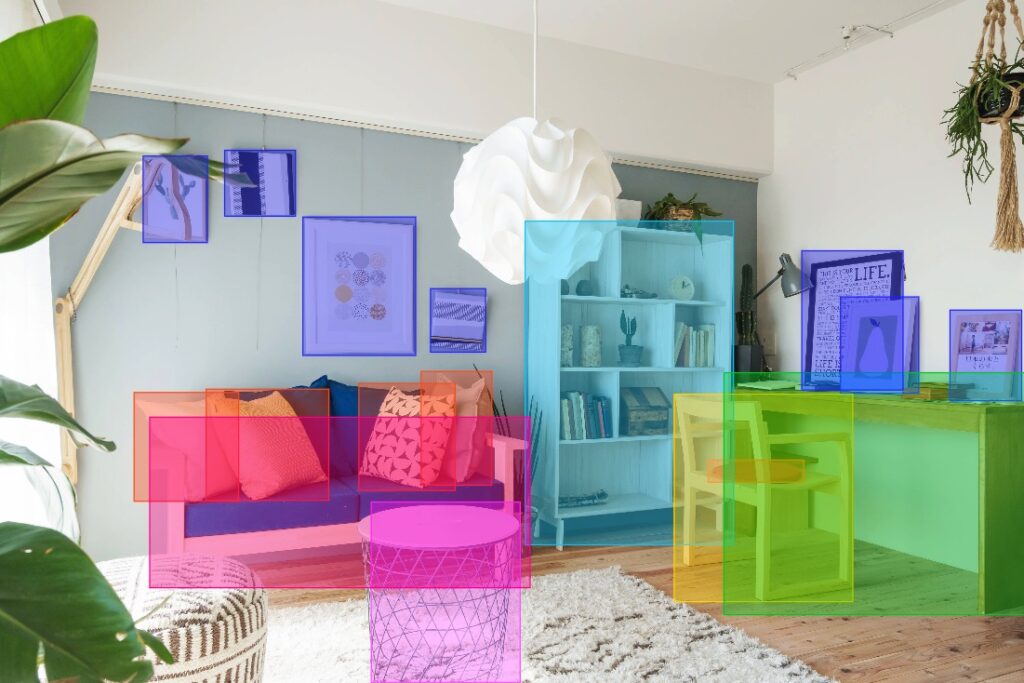
| Segmentation | Pixel-level object outlines | Medical imaging, drivable area, defect regions | from $0.152 / region |
The ratio is the part worth internalizing: a segmentation region starts at roughly four times a bounding box. That gap is labor, not markup — a box is two clicks, an outline is thirty.
Polygon annotation sits between the two. It gives you a tighter outline than a rectangle without demanding pixel-perfect edges, and where it lands on a rate card depends entirely on how tight the outline has to be, so it is quoted against your spec rather than published as a flat rate.
Two practical notes. First, keypoint pricing is per point, not per object — a 17-point skeleton on 1,000 people is 17,000 units, not 1,000. Second, if you are unsure whether boxes are enough, they usually are: start with detection, measure, and only move to segmentation when box edges demonstrably cost you accuracy. Our semantic segmentation guide covers where that line falls, and the YOLO training data workflow covers the detection case end to end.
What actually drives your unit price
Quotes from different vendors are rarely comparable, because the same phrase covers different amounts of work. Five things move the number:
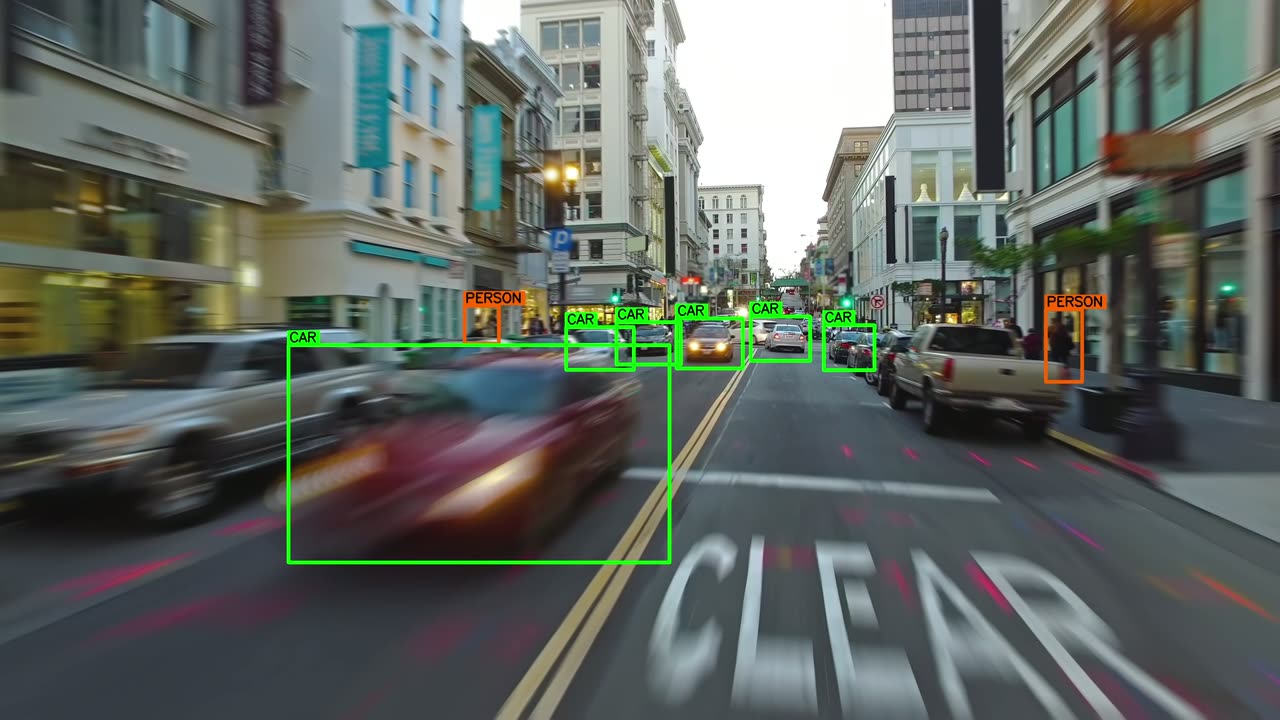
- Objects per image, not images. Per-object billing means a crowded street scene with 40 vehicles costs forty times a product shot. Estimate your average object density before you estimate your budget.
- Edge-case density. Occlusion, truncation at the frame border, ambiguous class boundaries — these are where annotator disagreement lives, and handling them properly requires written rules and slower work.
- Inspection standard. Sampled spot checks and full-volume inspection are very different products at very different costs. ANOSUPO inspects every deliverable rather than a sample, with a measured label consistency of 99.7% across 2025 deliveries.
- Model-assisted pre-labeling. A first pass from a foundation model followed by human correction reduces effort on well-defined classes. It helps least on exactly the ambiguous cases that need humans most, so treat it as a cost lever, not a quality claim.
- What the quote excludes. Setup fees, project management fees, monthly minimums, and paid rework all sit outside the headline rate at some vendors. ANOSUPO charges no setup or management fee and bills purely on volume created.
A rough illustration at published rates: 10,000 images averaging three objects each is 30,000 boxes, or about $1,080. The same 10,000 images at pixel level, averaging two regions each, is 20,000 regions — around $3,040. The image count did not change; the type and the object count did. Full rate details are on our pricing page, and a quote against your actual spec is free.
How to scope a first batch
Do not send 50,000 images as your first order. Almost every expensive annotation failure traces back to a specification that looked complete in a document and fell apart on real data. Three steps, in order:
- Trial (roughly 10–50 items). ANOSUPO annotates a small sample of your real data under the production workflow, at no cost, so you can judge output quality and communication before any commitment. This is a vendor test, not a dataset.
- PoC (roughly 50–100 images). This is a specification test. Deliberately include the hard frames — heavy occlusion, poor lighting, the classes your team argues about — because a PoC made of clean images tells you nothing you needed to know.
- Scale. Only once the guideline survives contact with the difficult cases. There is no minimum-order requirement, so scaling up is a decision about your data readiness, not about contract thresholds.
Trial (roughly 10–50 items). For companies developing AI products, ANOSUPO annotates a small sample of your real data under the production workflow, at no cost, so you can judge output quality and communication before any commitment. Each request is reviewed first. This is a vendor test, not a dataset.
What to check before you commit to a vendor
Six questions that separate providers more reliably than price does:
- Is inspection full-volume or sampled? Ask for the actual figure and the period it covers, not a target.
- Who fixes errors, and for how long? ANOSUPO corrects defects attributable to us against the agreed specification at no charge for one year after delivery. Changes to the specification itself are a different conversation, and any honest vendor will say so.
- Do the formats and tools fit your pipeline? COCO, Pascal VOC, YOLO text, and PNG mask output cover most cases; tool-specific delivery through CVAT, Labelbox, or SuperAnnotate matters if your team already lives in one of them.
- Is security certified or merely described? A certification such as ISO/IEC 27001 is externally audited. A security page is not.
- Do they ask you spec questions in the first call? A provider who asks how you want occlusion and truncation handled has annotated images before. One who only asks for image counts has not.
- Can they handle genuinely awkward work? Complexity, not volume, is where vendors fail. For a construction-site AI project, our team color-coded rebar by type and documented the ambiguous cases as they appeared — see the Pixie Dust Technologies case.
Working with a provider in another country
Once your shortlist crosses borders, three factors that rarely appear on a rate card start to matter.
Data residency. Ask where your images are stored, where they are processed, and whether anything persists after delivery. ANOSUPO works cloud-only with no local retention, separates teams per project, never reuses client data to train its own models, and physically deletes data when a project closes. If your images carry regulatory or contractual location constraints, raise them during scoping rather than after the quote — they can change the workflow.
Certification as common ground. ISO/IEC 27001 is useful precisely because it is international: it gives your security reviewer a comparable frame of reference for a vendor they cannot visit. ANOSUPO is certified, and the specifics are on our security page.
Time zone offset. A large offset is a liability for real-time collaboration and an asset for batch work — deliverables land while your team sleeps. It rewards written specifications and structured handoffs, and punishes teams that rely on quick clarifying calls. ANOSUPO is based in Fukuoka, Japan, and operated by Borderless Japan, with delivery across more than 1,000 projects. For a sense of sustained throughput at that distance, our environmental-AI client reached roughly 100,000 items per month at about half their previous cost — the Pirika case has the details.
Data for environmental AI half the cost, at scaleCase study: Pirika's litter-survey AI "Takanome." ANOSUPO took on annotation of ever-growing video data, cutting cost to about half and scaling throughput to 100K items a month and 1M+ delivered — a data foundation in-house work could never reach.annotation-support.com
Frequently asked questions
How much do image annotation services cost?
ANOSUPO’s published rates start from $0.036 per bounding box, $0.021 per keypoint, and $0.152 per segmentation region, with no setup or management fee. Your total depends far more on the number of objects per image and the annotation type than on the headline rate, so estimate object density first.
Is there a minimum order?
No. There is no minimum-order requirement, and we take on PoCs of around 50 to 100 items. Separately, you can run a free trial on a portion of your real data — roughly 10 to 50 items — before placing any order.
What formats and tools do you deliver in?
COCO, Pascal VOC (JSON/XML), YOLO (txt), and segmentation masks as PNG, among others. We also work in specified tools such as CVAT, Labelbox, and SuperAnnotate, and support security requirements such as VPN connections.
How is quality checked, and what happens if labels come back wrong?
Every deliverable goes through full-volume inspection rather than sampling, with a measured label consistency of 99.7% across 2025 deliveries. For one year after delivery, we correct defects on our side that deviate from the agreed specification at no charge. This does not cover changes to the specification itself.
How quickly can a project start?
In as little as two days once the specification is agreed. If your images still need cleanup, formatting, or anonymization before labeling can begin, that work is scoped alongside the annotation itself.
Where to go from here
Image annotation is a solved problem operationally and an unsolved one specifically: the difficulty is never drawing the box, it is agreeing on which boxes to draw. Choose the lightest annotation type your model actually needs, estimate cost from object counts rather than image counts, and prove the specification on a small batch that includes your hardest frames before committing to volume.
If you want a second opinion on a spec, or a cost estimate against your real images, we are glad to look at them with you. Full coverage of what we handle is on our image and video annotation page.
Try our quality on your own data — for free.